By Mel Abraham, CPA, CSP◆USA Today Bestselling Author
Sponsored Content — Speaker Resource
A Guide for Event Planners & Speaker Bureaus
What Makes an Event Unforgettable. A Guide from Someone Who's Been on Both Sides of the Stage.
This is not a speaker pitch. It is a resource for event planners and speaker bureaus who want to know what separates a talk that gets applause from an event that changes something. Written by someone who has spoken on hundreds of stages and built his own events from 20 people to 2,000. Both sides inform everything on this page.
Every planner has booked a speaker who checked every box on paper and missed the room entirely. What was the difference between that experience and the one your attendees still talk about?
There is one question I ask before I accept every booking. Not after the contract is signed. Before. And the answer tells me everything I need to know about whether the fit is right.
The question is this: what do we want the audience to feel, think, or do when we are through?
If the organizer has thought about it, the answer shapes everything: the opening, the framework, the stories I choose, the moments I build toward. If they haven't thought about it yet, we think about it together before anything else happens. Because without that answer, the talk is just content delivered to a room. With it, the talk becomes the moment the event was designed around.
I've asked that question from both sides of the room. As a speaker on hundreds of stages across the world. And as the person running the event, managing the room, watching from the back, and feeling the difference between a speaker who served the audience and a speaker who served themselves.
Most speakers are transactional. Fly in. Deliver the talk. Fly out. No relationship with the theme, the outcomes, or the people in the seats. No understanding of what the audience carried in before they sat down. Just words delivered, a fee deposited, and a post on social media about being honored to share the stage. The event planner is left holding the experience, good or mediocre, with no partner in the outcome.
That is not how this works. And the difference is worth understanding before you decide who belongs on your stage.
◆
Three Questions Worth Asking Before You Book Anyone
These are not questions about any specific speaker. They are questions worth sitting with for every speaker you are evaluating, for any event. The answers will tell you more than a reel will.
1
Does This Speaker Understand What Your Audience Is Carrying Into the Room?
Most speakers know their content. Fewer know their audience before they step on stage. The best ones ask what is keeping your attendees up at night, what they are anxious about, what they have already tried that has not worked. That context changes how a talk lands. Not just the examples chosen, but the permission given. When a speaker names what the audience is silently carrying, the room opens in a way no amount of polish can manufacture.
At an executive leadership summit, I asked the organizer one question before going on stage: what are your leaders most afraid to say out loud in a meeting right now? The answer changed the direction of my opening entirely. When I named what was actually consuming the bandwidth of the people in that room, I watched senior executives visibly exhale. Three came up afterward and said some version of the same thing: I did not know that was allowed to be a topic at work. That moment does not happen without the question that preceded it.
2
Does This Speaker Have a Point of View Your Event Doesn't Already Have?
The best fit is not always the speaker who speaks on your exact theme. It is often the speaker whose insight adds a dimension the event did not have before. That requires genuine intellectual property built from real experience and tested in real rooms. There is a meaningful difference between a speaker who has developed frameworks from lived proof and one who has polished someone else's ideas into a compelling delivery. Both can be engaging. Only one leaves the audience with something they cannot find anywhere else.
At a sales kickoff for a financial services company, I asked every person in the room to think about the last deal they discounted when they knew they should not have. Nearly every hand went up. What followed was not a conversation about sales technique. It was a conversation about what was running underneath the technique, and why the best training in the world cannot fix a constraint problem. The VP of Sales pulled me aside afterward and said the room had not been that honest with itself in years. That conversation does not exist on most sales stages because most speakers do not have a framework that reaches that deep.
3
What Does Every Person in the Room Leave With That They Didn't Have When They Walked In?
Inspiration matters. Frameworks help. But the events that get talked about at next year's planning meeting are the ones where every person left with something specific, measurable, and personal. Not a handout. Not a session recording. Something they could act on before they got back to the office. Before you book anyone, ask what that something is for your specific audience. If the answer is vague, that is your answer.
At an entrepreneurial conference of about 400 founders, every person in the room took a live diagnostic in under three minutes and left with a bandwidth percentage, a framework position, and three targeted moves specific to their situation. Not group advice for the room. Individual results for every person in it. The organizer told me people were still talking about it at dinner. That is the difference between an experience and an outcome, and it is a question worth asking of every speaker you consider.
"Mel is an unbelievable speaker and storyteller. He brings out the emotion in the audience and knows how to bring topics to life with humor, humility, and knowledge. His delivery style is a combination of inspiration and actionable lessons. Making him one of the best presenters I've ever seen."
— James Wedmore, BBD Live
◆
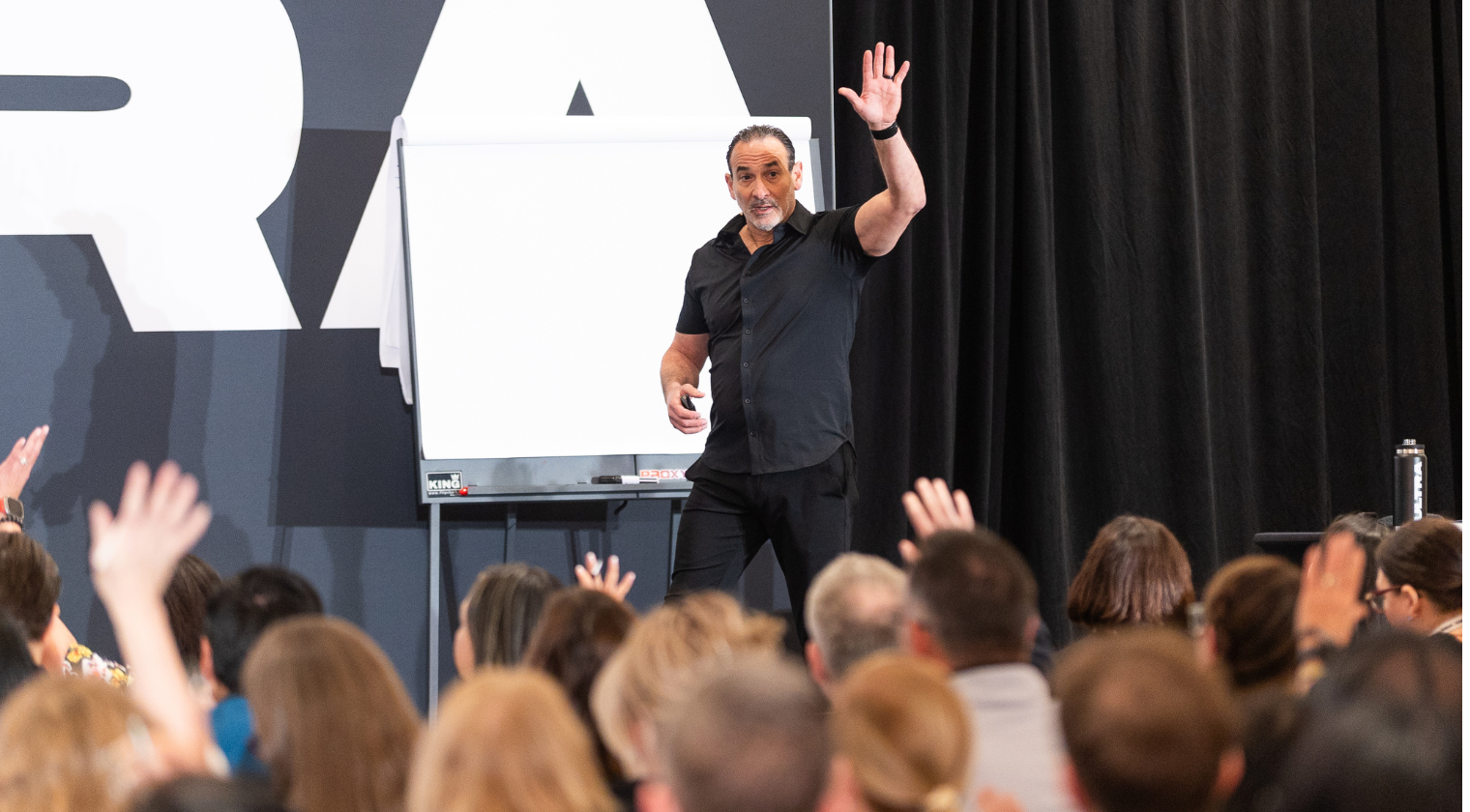
A room fully engaged. This is what the outcome looks like from the front of the stage.
What Your Attendees Are Carrying Into the Room That Most Agendas Never Address
After years on stages and years running events, one thing becomes clear. The gap between a talk that lands and a talk that transforms almost always comes down to something the agenda never planned for. Not the content. Not the speaker's credentials. The weight the audience arrived with.
Your attendees are not blank slates when they sit down. They are carrying financial pressure, emotional load, and decision noise that quietly consumes the cognitive bandwidth they need to be fully present, fully open, and fully capable of doing something with what they just heard. Most agendas assume the audience is ready. The events that create the deepest impact address what the audience arrived with before trying to give them something new.
I was working with a CFO in the logistics industry some time ago. Senior executive. Manages hundreds of millions. The financial brain of an entire organization. At some point in our conversation he said something I have not forgotten: "I can't think straight sometimes during the day. There's so much pressure on me." Not because he lacked resources. Because he lacked clarity about his own financial situation. The weight was consuming bandwidth he needed to lead. If it runs that deep at the CFO level, it runs through every layer beneath it. Every person in your audience is carrying some version of that weight into your event. And the speaker who names it, measures it, and gives them a path forward is the one your attendees remember.
About the Author
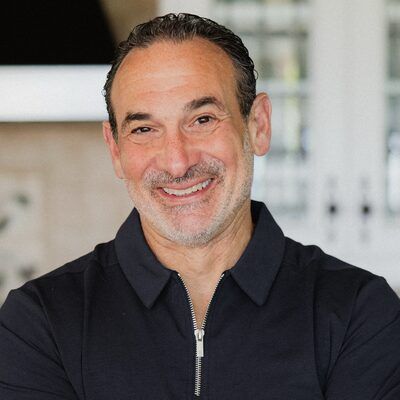
Mel Abraham, CPA, CSP
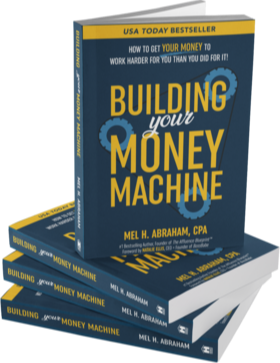
USA Today bestselling author of Building Your Money Machine. Two-time cancer survivor and single dad who rebuilt his financial life from scratch. Former Big 4 CPA turned globally in-demand keynote speaker, Certified Speaking Professional (CSP), and creator of Fully Expressed™, the system for achieving, leading, and living without constraint. Mel has shared stages with Brendon Burchard, James Wedmore, and leading voices across the entrepreneurial, corporate, and leadership worlds.
◆
What Your Attendees Are Likely Carrying Into the Room
The CFO I told you about earlier. His experience is not unusual. It is representative. Financial pressure, emotional load, and decision noise quietly consume the cognitive bandwidth your attendees need to be fully present and open to what you have planned. The data behind that constraint is worth understanding before you build the event around it.
57%
of employees say money is their number one source of stress, regardless of income level or role
76%
manage personal finances during work hours every week, consuming focus your event was designed to activate
3+ hrs
lost per person per week to financial stress. That bandwidth is what your event is competing with.
150 hrs
lost every week in a room of 50 people. The event that addresses this stands apart from every other one they attend.
Most agendas plan for the audience at their best. The events that are remembered plan for the audience as they actually arrive. A speaker who understands what people are carrying in, and who has built their work around addressing it directly, changes what is possible in the room.
"Mel has a unique gift for making complex financial concepts instantly clear and deeply motivating. Our attendees left not just inspired — they had a plan."
— Brendon Burchard, GrowthDay
◆
More About Mel
Mel Abraham is a CPA, Certified Speaking Professional, entrepreneur, and USA Today bestselling author of Building Your Money Machine. He has helped leaders, entrepreneurs, and organizations build financial clarity, eliminate constraint, and create lives of freedom and choice. His work, built from lived proof including personal financial loss and two battles with cancer, sits at the intersection of performance, money, and meaning.
6M+
YouTube Views
185K+
Total Community
700K+
Podcast Downloads
30K+
Weekly Readers
Featured Keynotes
The Performance Tax™How the Hidden Cost of Financial Stress Is Silently Stealing Your Organization’s Best Performance
Conviction Over CommissionHow Financial Sovereignty Turns Fear-Based Selling Into Performance-Based Selling
Building Your Money MachineStop Being the Engine. Start Owning One. The blueprint for converting active income into lasting wealth.
Mel speaks for executive conferences, sales kickoffs, leadership retreats, HR and people operations summits, and entrepreneurial events worldwide. Formats: keynote, half-day workshop, full-day intensive, any audience size.
If the Fit Is There, Let's Talk
Everything you need to evaluate the fit for your event is at the speaking page. The reel, the one-sheet, the keynote details, and a direct way to start the conversation.
AbbVie · IRS · GrowthDay · National Speakers Association · Financial Planning Association · CalCPA · NACVA · State Bar of California · Amare Global · BBD Live · Ultra Performance · BOTAO